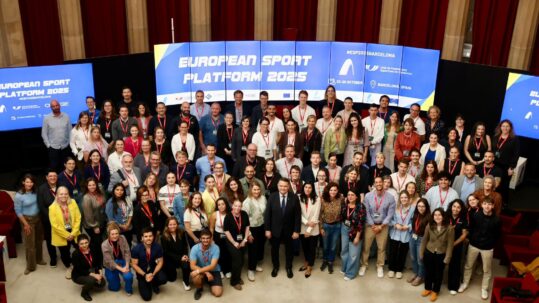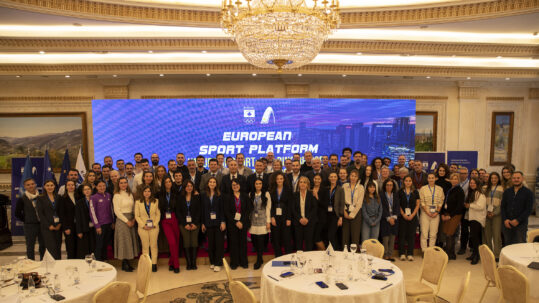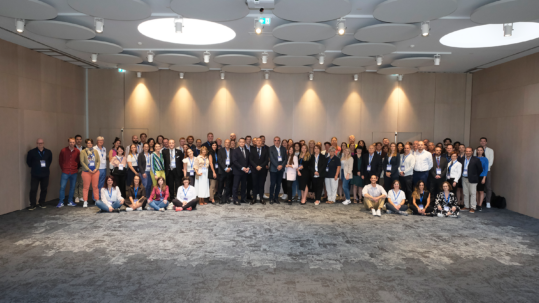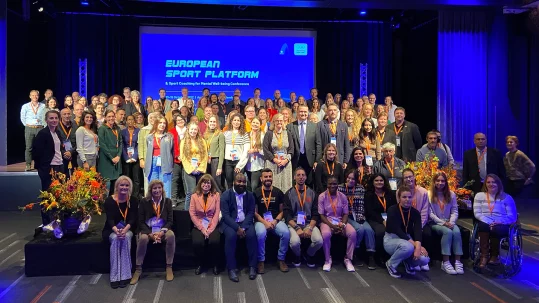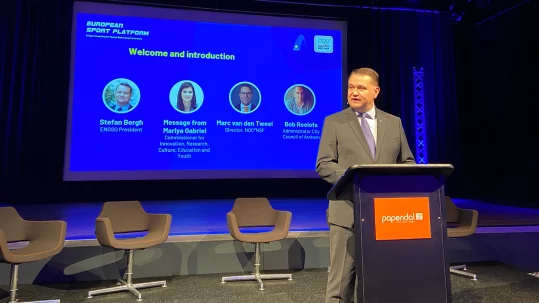




The European Sport Platform is the flagship event of ENGSO, where ideas connect, perspectives evolve, and the future of sport takes shape. It offers a valuable opportunity to connect with ENGSO members, National Olympic Committees, National Paralympic Committees and National Sport Confederations, as well as other sports organisations and stakeholders.
Hosted by
Join us for a forward-looking conference where we will explore inspiring perspectives on topics such as from silence to science – women’s health in sport, the impact of volunteers, and sport as a force to build unity, resilience, and empowerment. The European Sport Platform offers a valuable opportunity to connect with ENGSO members, National Olympic Committees, National Paralympic Committees and National Sports Confederations, as well as other sports organisations and stakeholders.
15 – 17 October 2026
Split, Croatia
Hotel Amphora
ENGSO members: 95 EUR
Non-ENGSO members: 140 EUR
The event is supported by:
14.00 – 14.15
Official welcome
14.15 – 15.15
Bence Garamvolgyi, ENGSO projects manager
Speakers:
Moderator: Rachel May
André Urban is an International Officer at OPES aps, Italy, where he supports the implementation of its international projects, volunteers management, and fosters the collaboration between the organization’s extensive national and international network. He holds a Master’s degree in Project Cycle Management from UNINT, a Master’s degree in International Cooperation on Human Rights and Intercultural Heritage from the University of Bologna, as well as a Bachelor’s degree in Communication Sciences, specializing in Advertising and Filmmaking, from the Universidad de Lima (Perú).
With experience in the third sector and cultural industries, he’s developed a particular interest in the role of sport as a driver of social change, civic participation, sustainability, and inclusion. His work with OPES and its network of over 10,000 member clubs has strengthened their commitment to moving beyond project boundaries and ensuring that initiatives reach and meaningfully impact the communities they are designed to serve.
Shadde Fessaha is a Senior Project Leader at Triple ThreaT, a youth and community organisation based in Haarlem, the Netherlands. His work focuses on creating opportunities for young people through sport, personal development and active community engagement.
In his role, Shadde develops and leads projects, coordinates teams and programmes, and builds partnerships with organisations and stakeholders. He is also actively involved in developing new initiatives, with a strong focus on turning ideas into practical and sustainable projects that respond to the needs of young people and their communities.
Through his work at Triple ThreaT, Shadde sees sport not only as an activity, but as a powerful tool for connecting people, strengthening communities and supporting young people in their personal development.
Maja Poljak is the EU Funds and International Cooperation Coordinator at the Croatian Olympic Committee, where she manages EU-funded projects and contributes to international cooperation within the Olympic and European sport movement. A former professional volleyball player and long-standing captain of the Croatian national team, she combines first-hand elite sport experience with expertise in sport management and international events. Before joining the Croatian Olympic Committee, she served as Head of Events at the European Volleyball Confederation (CEV). She also has extensive experience in the organisation and delivery of top-level international volleyball events, and is still working across major competitions at both European and world level.
Dina Koren is a Master of Social Pedagogy and a licensed Child and Adolescent Integrative Psychotherapist. She is Head of the Family Care Programme and the Professional Team for Child Development at SOS Children’s Village Lekenik, Croatia. Her work focuses on supporting children and families, leading multidisciplinary teams, and developing quality care services. She also provides training for professionals working with children and is a member of the Croatian Chamber of Psychotherapists and the Croatian Chamber of Social Pedagogues.
Rachel is a Project Consultant for ENGSO. Rachel is also the Founder of Mhor Outdoor which improves access to the outdoors in Scotland for marginalised communities. Rachel has worked in sport for Development since 2014, largely on international sports projects and partnerships for the inclusion of society’s most vulnerable or marginalised. Rachel grew up in Aberdeenshire, Scotland and currently lives in Denmark, she is qualified as a Mountain Leader and enjoys sharing new experiences with people outside.
15.15-15.45
Coffee break
15.45-17.00
Speakers: Bence Garamvolgyi and Rachel May, ENGSO projects
17.00-17.15
Conclusions
End of day one
No dinner is organised on Thursday, allowing participants the opportunity to explore Split at their own pace

9.00 – 9.15
Reflections on day one
9.15 – 10.30
Speaker: Dr. Davorka Herman Mahečić
Davorka Herman Mahečić, MD, is an internal medicine specialist, endocrinologist and diabetologist working at the Department of Human Reproduction, University Hospital Centre Zagreb. Her clinical and academic interests include reproductive endocrinology, metabolic health, and women’s health in sport. She is also Head of Healthcare and a member of the Medical Commission of the Croatian Olympic Committee, and teaches at the University of Zagreb School of Medicine.
From Silence to Science – Women’s Health in Sport
This presentation explores how the historical under-representation of women in sports science has shaped our understanding of female athlete health. It follows the journey from overlooked issues to better evidence and, ultimately, practical action — highlighting RED-S, reproductive health, pregnancy and postpartum, menopause, and the need to support women in sport throughout their lifespan.
Moderator: Mia Baćić
Panel:
Mia Baćić is an experienced professional in international cooperation, strategic communications, and sports governance, with expertise spanning international relations, public affairs, media relations, and public outreach. Her work includes advancing international partnerships, coordinating strategic communication, strengthening institutional visibility, and developing digital communication across social media platforms. As Secretary of the Gender Equality Commission, she contributes to advancing inclusion, equality, and equal opportunities in sport. Her experience within the Croatian Olympic Committee (COC) includes serving in senior roles related to international cooperation, public relations, and strategic advisory work including Director for international cooperation and public relations. Through these responsibilities, she has developed a comprehensive understanding of sports governance, institutional communication, and stakeholder engagement at both national and international levels. Prior to her work in sport, Mia gained valuable experience in diplomacy and public administration at the Ministry of Foreign and European Affairs of the Republic of Croatia, where she worked on government-level communications, international relations and policy coordination as an Adviser to the Minister. Alongside her professional career, she has pursued doctoral studies in political science, with a focus on media and politics, and holds a postgraduate specialist degree in comparative politics. Her professional background brings together expertise in international relations, strategic communications, public policy, and sports administration, positioning her to contribute meaningfully to discussions on gender equality, inclusion, and effective communication in sport.
10.30-11.00
Coffee break
11.00-12.30
Organised within the framework of the ReWSE project but led by ENGSO Equality Within Sport Committee
Introduction: Tarja Krum, ENGSO EWS Chair
Panel:
Roundtable discussion
Sarah is a passionate advocate for inclusivity in sport, with a long-standing commitment to challenging gender inequalities. She is a former Board Member and President of the EGLSF, as well as a member and Vice Chair of the ENGSO Equality Within Sport Committee. She was also one of 15 experts appointed to the European Commission High-Level Group on Gender Equality in Sport.
As President of Activ’Elles, a grassroots organisation based in the French Southern Alps, she works to create safer and more inclusive spaces for women in sport and outdoor activities. An experienced hiking guide, rowing coach, and ice-water swimmer, Sarah brings her passion for the outdoors into all aspects of her work, promoting access, participation, and equality across sport and physical activity.
Social media handles:
Twitter : @SET04SARAH
Facebook : https://www.facebook.com/sarah.townsend.5682
Activ’Elles Social media
Twitter : ActivElles04
Facebook https://www.facebook.com/ActivElle04
Tarja Krum is Sustainability Manager at Finlands Svenska Idrott (FSI), where she works with equality and non-discrimination, safe sport, good governance and environmental sustainability. She is Chair of ENGSO’s Equality Within Sport Committee and represents Europe on the Global Executive Committee of the International Working Group (IWG) on Women & Sport.
Alice is the Referent for European Relations of ASSIST (national women athletes association of Italy). She has more than 10 years experience in social inclusion and gender equality and works as project manager at national and European level.
12.30 – 14.00
Lunch
14.00 -14.30
Lovisa Broms, ENGSO projects coordinator
14.30 – 16.00
This session will explore how sport can become more inclusive by taking an intersectional approach to the different identities and experiences that can lead to marginalisation and discrimination. Inequalities in sport affect people in different ways. Different aspects of identity and life circumstances – for example gender, disability, ethnicity, age, sexual orientation and socio-economic background – can intersect and shape people’s opportunities, barriers and experiences in sport. This includes, for example, the diverse experiences of women in sport. By recognising and responding to these different experiences, sport organisations are not only addressing inequalities – they are investing in people, participation and a more inclusive future for sport. Following a short introduction to intersectionality, an interactive panel will bring lived experiences into the discussion. Participants will then work in roundtables to explore existing toolkits, guidelines and charters, identifying gaps and developing concrete ideas to strengthen them. The session will conclude with a joint reflection and the collection of key contributions towards a Charter on Making Sport More Inclusive.
Hosts: Mathias Roos (EWS Member), Liam Strasser (EWS Member) and Tarja Krum (EWS Chair)
Organised within the framework of the EUYOUSPORT Project, this session will bring together young people and sport stakeholders to reflect on the progress and future of meaningful, evidence-based youth participation in sport governance. It will explore how youth participation can move from policy commitments to practical mechanisms that give young people a meaningful role in shaping decisions in sport.
Moderator: Tiago Guilherme, ENGSO Youth Managing Director – Tiago Guilherme is the EUYOUSPORT project coordinator and develops and leads initiatives and advocacy aimed at increasing youth participation in sport governance.
Speakers:
The session is organised within a framework of the Sports Without Borders project. The main objective of the project is enhancing the positive physical and psychological benefits that an innovative combination of sports, circus arts, and mental health support can have in promoting social inclusion among displaced people due to wars and in need of humanitarian support, particularly the youth (children aged 6-12; youth aged from 13 to 22). This integrated approach will act as a critical mediator for achieving positive settlement and enabling young refugees to engage meaningfully in their hosting societies.
16.00
Conclusions from the different workshops
16.30
End of day two
19.30
Gala dinner
9.00 – 9.15
Reflections on day two
9.15 – 10.00
A discussion with Nahom Desale, former professional cyclist
Moderator: Rachel May
Nahom Desale was born on 3 December 1992 and raised in Asmara, Eritrea, at about 2,400 metres above sea level. I started cycling at the age of eight, as cycling is the number one sport in Eritrea. I continued cycling until 2020, becoming a professional cyclist in 2018. I ended my cycling career during the COVID-19 pandemic in 2020. At the end of my cycling career, I switched to the automotive world and started training to become a car mechanic. I have now completed my diagnostic technician courses. It took me five years to become a qualified diagnostic technician. In addition, I started my own business, a car repair and maintenance shop. Alongside this, I am also active in bringing together former Eritrean cyclists, as well as active cyclists from across Europe, including by organising races for the group. I also coach and support talented Eritrean cyclists, as well as Dutch beginners who are starting their cycling journey. Cycling has given me a huge boost in life, far beyond racing and performance. Meeting people from different nations and cultures enriched my experience and helped me see things from different perspectives. I therefore believe that sport, in general, brings people together.
10.00-10.30
Coffee break
10.30-11.30
Speaker: Dr Tanja Bilić Brenner
Dr Tanja Bilić Brenner is a National Sports Federations Planning and Analysis Coordinator in the Croatian Olympic Committee (COC). She graduated from the Faculty of Economics in Zagreb (Economic Cybernetics). She holds a DBA (Doctor of Business Administration) in sports governance from Sheffield Hallam University (UK). She completed the IT designer course and is also a trained lead assessor for the ISO quality system.
During her many years at the Croatian Olympic Committee, she gained extensive experience in sports management and in designing and developing sports information systems, with a special emphasis on analytical support for decision-making and monitoring the effectiveness of sports programs. She actively participated in preparing the programs and financial reports for the Croatian Olympic Committee.
As a member of working groups preparing strategic documents for the COC and other documents crucial to the functioning and development of the sports system in Croatia, she helps formulate strategic goals, management and financing models, and systems for monitoring and evaluating sports policies. She pays special attention to connecting theoretical knowledge with the practical needs of sports organisations and public institutions.
She is a lecturer at the Zagreb School of Economics and Management (Course: Introduction to Sport Management), and she often shares her professional knowledge and experience as a lecturer at the Croatian Olympic Academy and at numerous professional conferences, seminars, and training courses on the planning, management, and financing of the sports system. In her work with students and attendees, she encourages analytical and critical thinking and understanding of the complexity of the sports system.
She has also served as director of Sports Television, owned by the Croatian Olympic Committee (COC), since September 2026.
The Champions Behind the Scenes – Volunteers in Sport
In this lecture, she will present the results of the Erasmus+ project EVIS, focusing specifically on the state and development of sports volunteering in Croatia. I will discuss the project’s general and specific objectives, as well as volunteers’ role within the sports system.
She will address the fact that approximately 4% of citizens are involved in sports volunteering, below the European Union average of 6%. We will also examine the challenges associated with sports volunteering, such as a lack of information, insufficient social recognition of volunteer work, and the potential for volunteer exploitation. Furthermore, I will present research findings showing that citizens generally hold a positive attitude toward volunteering and that many people would like to engage in volunteer activities in the future.
The second part of the lecture will focus on volunteers within sports governance structures. She will also present results from research conducted in Croatia in 2022. I will discuss their importance for the functioning and development of sports organizations, ranging from local clubs to national sports federations. she will place special emphasis on the fact that volunteers often assume managerial roles and participate in key decision-making processes.
Finally, she will address the challenges volunteers face today. Increasing demands and the need for professional expertise in the sports sector can place an additional burden on volunteers, yet simultaneously create opportunities for their further development and professionalisation. Thus, the lecture will provide an overview of the current state of sports volunteering, its key issues, and its potential for future development.
11.30-12.00
European Lotteries
12.00-12.30
Conclusion and the ESP 2027 handover ceremony
12.30
End of the event

Split is a vibrant coastal city on the eastern shore of the Adriatic Sea, where ancient history meets a dynamic Mediterranean lifestyle. Built around the UNESCO-listed Diocletian’s Palace, Split blends Roman heritage with a lively modern atmosphere, offering a unique setting where centuries-old stone streets open directly onto bustling cafés, markets, and a scenic waterfront promenade known as the Riva.
As Croatia’s second-largest city, Split is also a gateway to the Dalmatian islands and a hub for sport, tourism, and outdoor activity. Its mild climate, sea-facing venues, and strong sporting culture make it an ideal destination for international conferences and events.