

SURE Project Celebrates Three Years of Cooperation with Final Conference in Split
15 October 2026 | Split, Croatia
After three years of European cooperation, research and practical activities, the Erasmus+ SURE (Strengthening the Resilience of Grassroots Sports Organisations) project reached an important milestone with its final partnership meeting and dissemination conference on 15 October 2026 in Split, Croatia.


Organised in conjunction with the 2026 European Sport Platform (ESP), hosted by the Croatian Olympic Committee, the event brought together SURE project partners, representatives of grassroots sports organisations, researchers and other European sport stakeholders to reflect on the project’s achievements and explore how grassroots sport can become more resilient, inclusive and sustainable.
Looking Back on Three Years of Cooperation
The day began with the final in-person meeting of the SURE consortium at Hotel Amphora, where partners reflected on the project’s three-year journey, reviewed its main achievements and discussed the final steps towards completing and disseminating its results.
Throughout the project, the international partnership worked to better understand the challenges faced by grassroots sports organisations, particularly in times of crisis and uncertainty. Through research, interviews, the collection of good practices and local pilot activities, partners explored how sport organisations can strengthen their capacity to adapt, respond to challenges and continue serving their communities.
The meeting provided an opportunity to review the project’s key outputs, including its research findings, collection of good practices and newly developed practical tools. Particular attention was given to ensuring that these resources reach grassroots sports organisations across Europe and remain accessible beyond the project’s lifetime.
Partners also discussed upcoming local dissemination activities and the finalisation of the project’s digital resources.
Bringing SURE’s Results to the European Sport Community
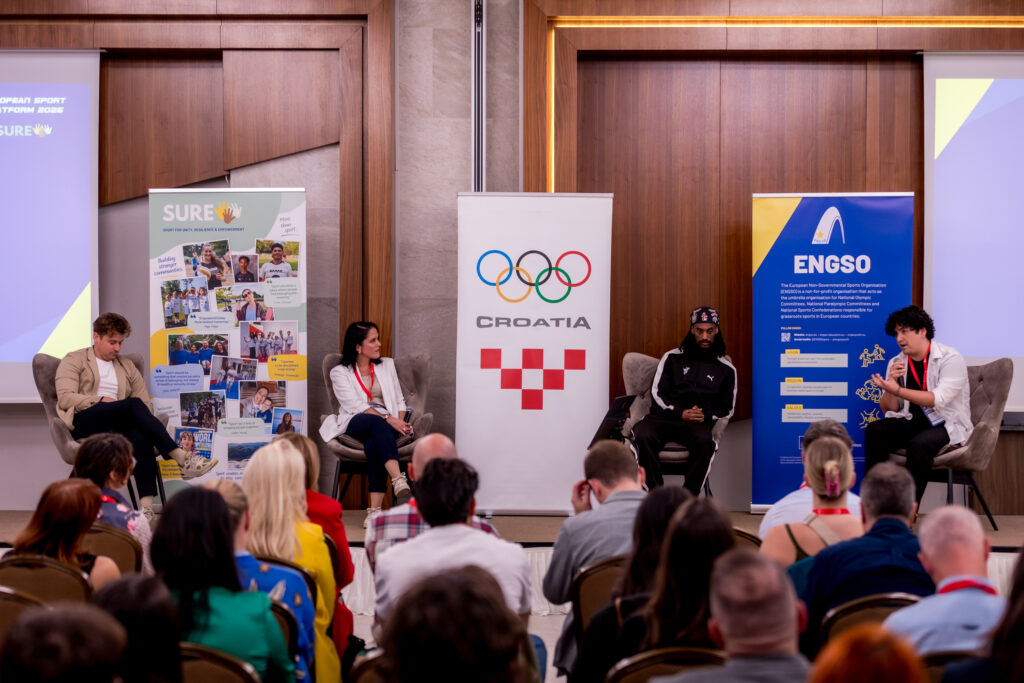
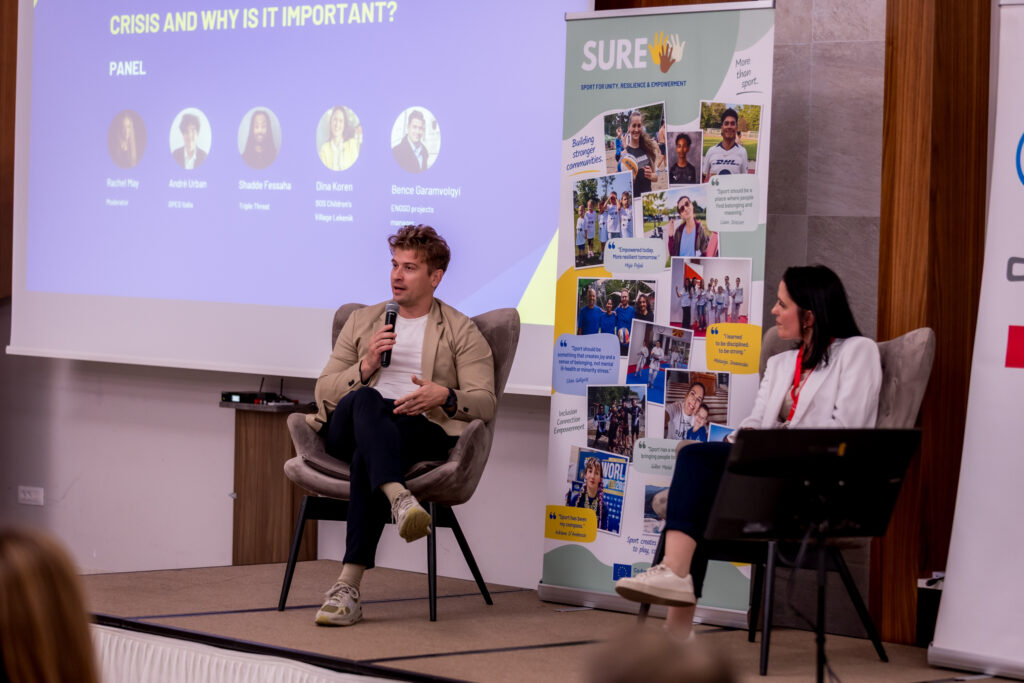
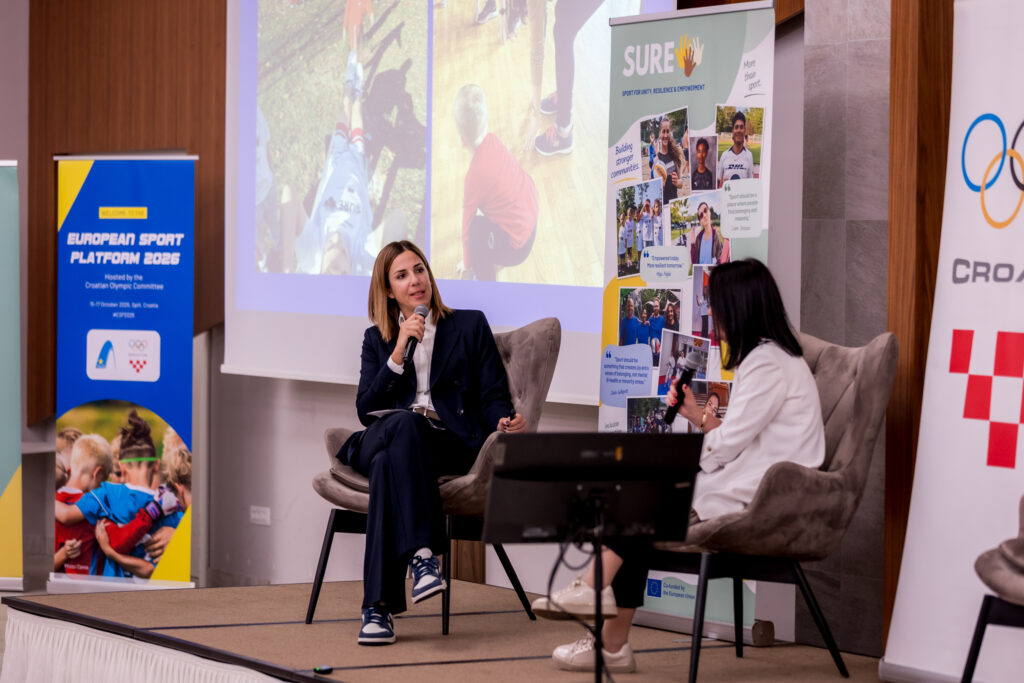
In the afternoon, the SURE project took centre stage during the opening day of the European Sport Platform, under the theme “How Do Sport Clubs Stay Resilient in Crisis and Why Is It Important?”
Following the official opening of the ESP, Bence Garamvölgyi, ENGSO Project Manager, introduced the SURE project, its objectives, the three-year cooperation process and its main outcomes.
The conference programme brought together complementary perspectives on resilience in grassroots sport.
André Urban from OPES Italia presented insights from the project’s research, highlighting the challenges experienced by grassroots sports organisations and the factors that can help them build resilience.
Shadde Fessaha from Triple ThreaT in the Netherlands shared practical experiences of using sport to empower young people, strengthen communities and create opportunities for participation.
Maja Poljak from the Croatian Olympic Committee and Dina Koren from SOS Children’s Village Lekenik contributed further perspectives on partnerships, social inclusion and the importance of cooperation between sport organisations and community stakeholders.
Moderated by Rachel May, the session connected research findings with practical experiences, demonstrating how resilience can be strengthened through collaboration, adaptability and community engagement.
From Research to Practice: Introducing the Resilience Compass
One of the key objectives of the final conference was to introduce the practical resources developed through SURE and demonstrate how they can support grassroots sports organisations in their everyday work.
Among the project’s main outcomes are two complementary digital resources:
- The Self-evaluation Tool, helping grassroots sports organisations reflect on their strengths, identify vulnerabilities and assess their organisational resilience.
- The Resilience Compass – Guide, offering practical recommendations, examples and approaches to help organisations become more resilient, inclusive and sustainable.
These tools address several interconnected aspects of organisational resilience, including financial sustainability, income diversification, volunteer management, partnerships, digitalisation, inclusion and organisational development.
Rather than providing a single solution, the resources encourage organisations to reflect on their own circumstances and identify realistic steps towards strengthening their long-term resilience.
An Interactive Workshop: Building Resilience Together
Beyond presenting the project’s results, the SURE partnership wanted to actively involve the conference audience in reflecting on the challenges facing grassroots sport.
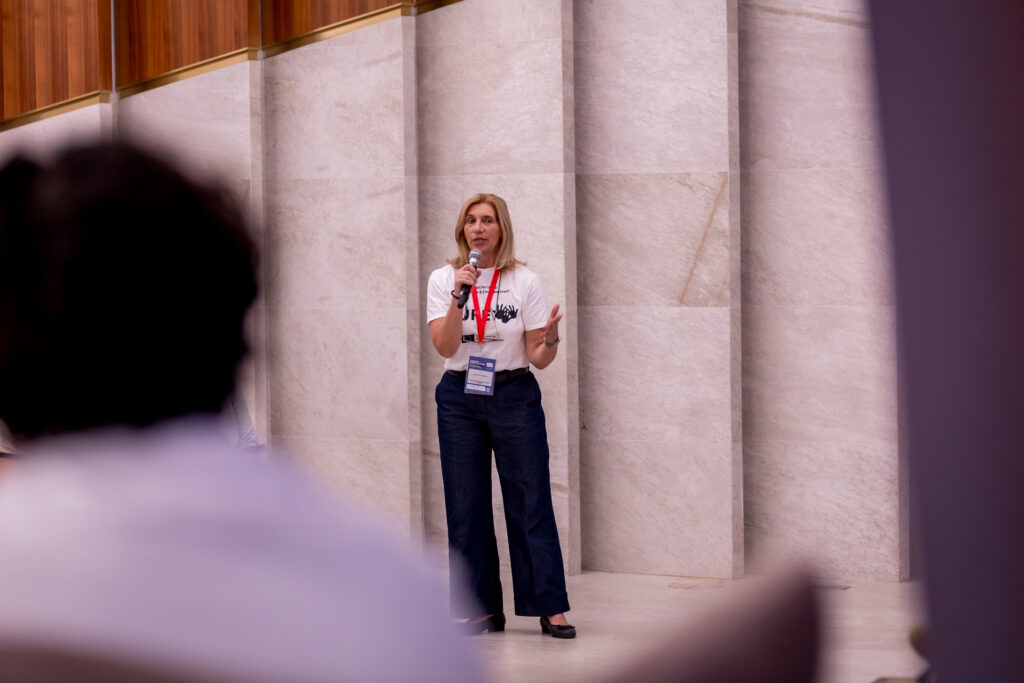
During an interactive workshop, participants were divided into approximately ten discussion groups, each facilitated by a SURE project partner.
Drawing on their own organisational experiences, participants reflected on the crises and challenges they had encountered, the resources available to their organisations and the strategies that could help them become better prepared for future uncertainties.
Discussions addressed questions such as how grassroots sports organisations can diversify their resources, strengthen partnerships, improve volunteer management and create more inclusive opportunities for participation.
Each group was encouraged to develop practical recommendations around three stages of crisis management: before, during and after a crisis.
This participatory approach created space for exchanging experiences, learning from different organisational contexts and connecting the project’s research findings with the realities of grassroots sport across Europe.
The workshop also reinforced one of SURE’s central messages: resilience is not only about surviving a crisis, but about building stronger, more adaptable and inclusive organisations that can continue making a positive impact on their communities.
What SURE Leaves Behind
The final conference marked an important milestone in the SURE project’s journey, but its outcomes are intended to continue supporting grassroots sport well beyond the project period.
Through its research, good practices, digital tools and practical recommendations, SURE provides a foundation for sports organisations seeking to strengthen their organisational capacity and respond more effectively to future challenges.
The partnership will continue its dissemination efforts during the final months of the project, including local activities across partner countries and further promotion of the Resilience Compass resources.
The event in Split demonstrated the value of bringing together research, practical experience and the voices of grassroots sports stakeholders to address shared challenges.
After three years of cooperation, SURE leaves behind not only a collection of resources, but also a shared understanding that resilient grassroots sport depends on strong partnerships, diversified resources, inclusive practices and the ability to adapt to change.
The SURE partnership extends its sincere thanks to all project partners, speakers, workshop facilitators and participants for their contributions, as well as to ENGSO and the Croatian Olympic Committee for providing the opportunity to share the project’s outcomes with the wider European sport community.
The SURE project is co-funded by the European Union through the Erasmus+ Programme.
Funded by the European Union. Views and opinions expressed are, however, those of the author(s) only and do not necessarily reflect those of the European Union or the European Education and Culture Executive Agency (EACEA). Neither the European Union nor EACEA can be held responsible for them.
Visit the project website for more information
