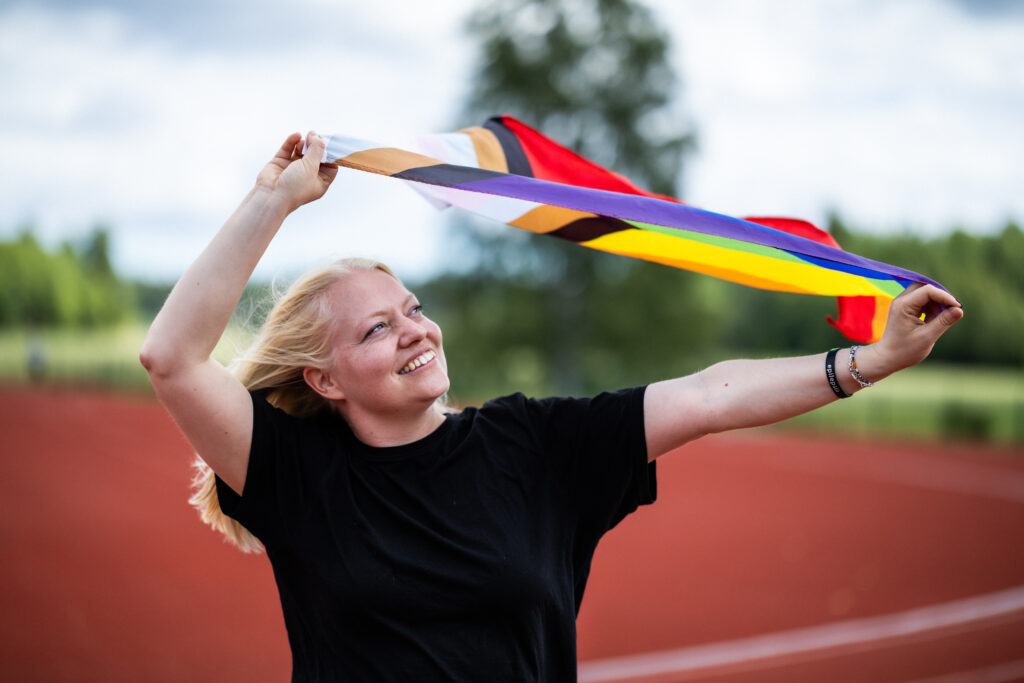
The Fredrika Runeberg Award is an annual €10,000 award in Swedish-speaking Finland recognising socially courageous work. In 2026, the award focussed on efforts to strengthen LGBTQIA+ people’s right to live openly and safely, at a time when space for diversity is narrowing in some contexts. A total of 108 nominations were submitted this year.
The award is named after Fredrika Runeberg, a Swedish-speaking Finnish author and one of Finland’s first female newspaper editors. Through her writing, she advocated for women’s rights, including access to education and work.
Recognition from beyond the sport sector
“Receiving the award means a lot to me personally. But its significance goes much further than that. I see it as a recognition of why this work matters. The fact that it comes from outside sport sends an important message that equality, inclusion and LGBTQIA+ rights in sport are also valued in society more broadly.”
The award committee’s motivation highlighted Krum’s work for equality and LGBTQIA+ rights in sport, including efforts to promote environments where people can feel seen, safe and respected regardless of sexual orientation, gender identity or gender expression. It also referred to her work at both national and international level, including her role as Chair of ENGSO’s Equality Within Sport (EWS) Committee.
“Equality, inclusion and human rights are not something separate from sport. They are about the kind of sport we choose to create and the values we want it to stand for.”
Equality through an intersectional lens
This perspective is closely connected to the work of ENGSO’s EWS) Committee.
EWS promotes gender equality through an intersectional approach, recognising that people’s experiences and opportunities in sport are shaped by multiple and overlapping factors, including sexual orientation, gender identity and expression, disability, socio-economic status, ethnicity, religion and migration background.
“Equality work cannot be separated into isolated boxes. Listening to a range of voices, perspectives and lived experiences is essential if we want to understand the barriers people may face in order to make sport more equal and inclusive.”
LGBTQI+ inclusion has been an important part of EWS’s work for several years. The Committee has conducted research into LGBTQI+ experiences in European sport and developed recommendations aimed at making grassroots sport safer, more inclusive and more accessible.
This intersectional approach is also reflected in EWS’s research on women in sport, which recognises that there is no single experience of being a woman in sport.
“An intersectional approach also challenges us to look critically at how we work, recognise barriers we may otherwise overlook, and turn what we learn into concrete action.”
From recognition to collective action
The recognition also provides an opportunity to highlight the many people working towards a more equal and inclusive sport.
“There are so many people across Europe working for equality and inclusion in their clubs, federations and organisations. This work can take a lot of energy, especially when it is questioned or when you feel quite alone. I especially want to thank the LGBTQIA+ organisations, sport organisations, policymakers and many others who continue this work every day. I hope this recognition can also give strength to them. We do this together.”
The longer-term goal is a sporting environment where equality, inclusion and safety are simply part of how sport operates.
“Ultimately, I hope we reach a point where we no longer need to ask who belongs in sport.”