ENGSO EWS Hosts Final Online Seminar of the Year: “The Political Pulse – Emerging Challenges to Gender and Sport”
EWS concluded its annual programme with an online seminar titled “The Political Pulse: Emerging Challenges to Gender and Sport.” The event was held on the International Day for the Elimination of Violence against Women and marked the launch of the 16 Days of Activism against Gender-Based Violence, coordinated by UN Women, of which ENGSO is a proud partner.
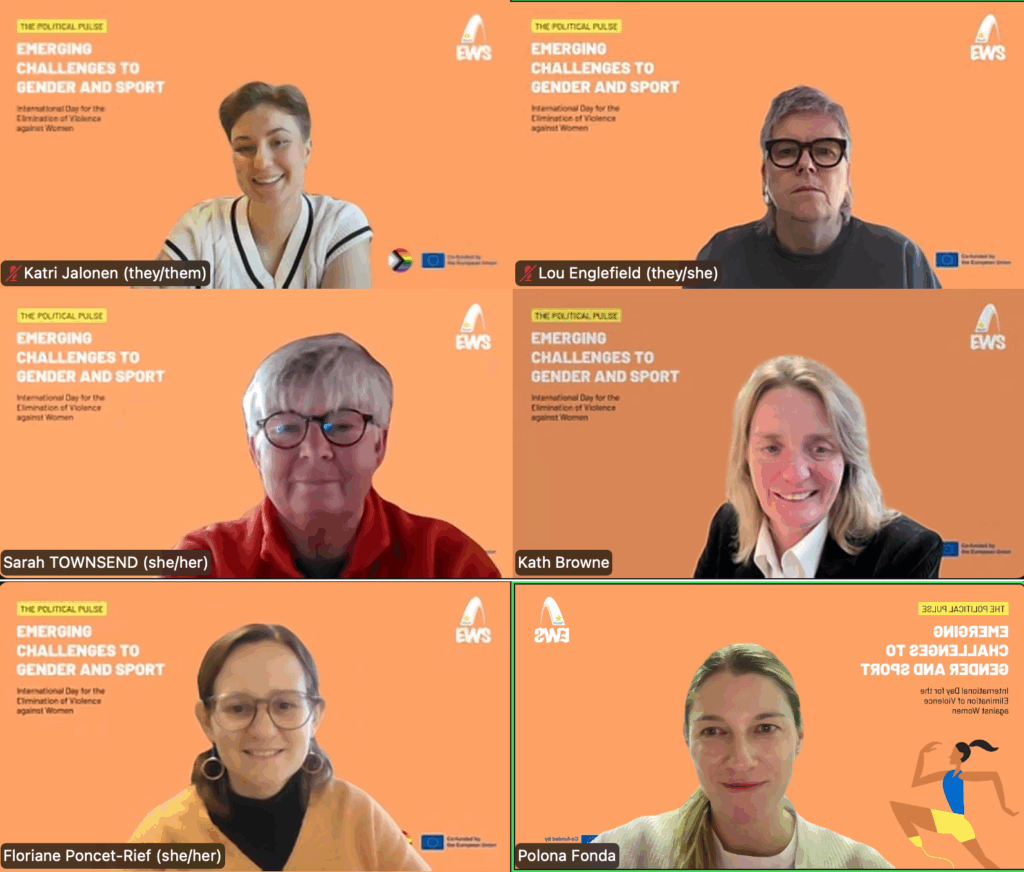
On 25 November 2025, EWS Vice-Chair Sarah Townsend moderated a discussion examining the state of gender equality and diversity in grassroots sport, set against the backdrop of current political developments in Europe and beyond. She was joined by three distinguished speakers: Katri Jalonen from the National Council of Women of Finland, Professor Kath Browne from the RESIST Project, and Lou Englefield from Pride Sports.
Drawing on both personal experience and academic expertise, the speakers outlined how the anti-gender movement is manifesting across Europe—from restrictive anti-abortion legislation to anti-LGBTQI+ policies and the growing prevalence of hate speech. They highlighted the profound impacts these trends have on individuals and communities, particularly those relying on organisations that support vulnerable groups. Many of these organisations are facing increasing pressure, hostility, and attempts to silence their work.
The seminar also addressed how the anti-gender / gender critical movement and current political focuses on gender are creating specific challenges emerging within grassroots sport. Individuals who are already less active—such as minorities and those facing intersecting forms of discrimination—are at an even greater risk of marginalisation and exclusion. Local sports clubs often lack the necessary resources and policies to ensure inclusive and accessible participation, which is further complicated by increasingly restrictive and exclusionary regulations introduced by some international sports federations, particularly those affecting trans women.
Speakers emphasised that sport should foremost be a source of joy, play, and movement for everyone. Encouragingly, some organisations remain committed to inclusive practices. For example, the Tennis Federation of Finland has adopted progressive regulations that prioritise self-determination and clearly differentiate between grassroots (under 18, amateur) and elite levels of sport. Community-based sports groups, including LGBTQI+ clubs, continue to offer vital safe spaces where marginalised individuals can participate freely and experience the benefits of sport.
A recording of the seminar is available upon request at [email protected].
This event concludes the latest series of activities organised under the Sport4CERV programme, led by ENGSO from 2022 to 2025. Learn more about Sport4CERV and explore ENGSO’s educational resources on equality via the ENGSO Education platform.