EQUALITY
ENGSO at the Play the Game 2025: Driving dialogue for democracy in sport
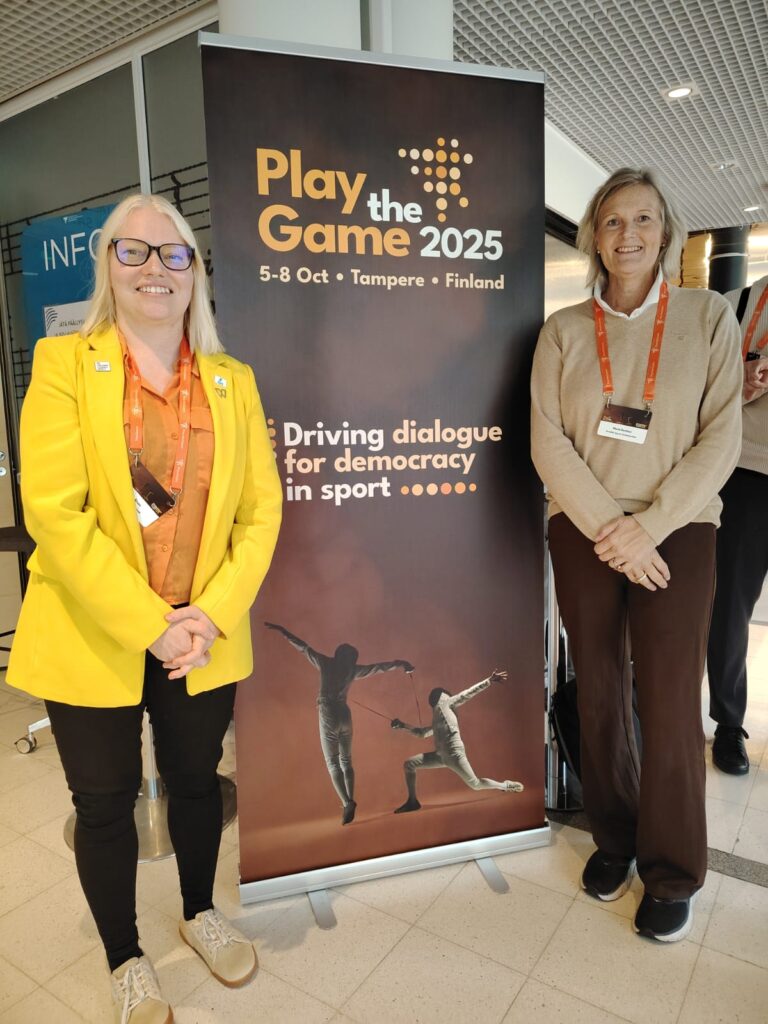
At the 2025 Play the Game conference in Tampere, Finland, 5-8.10 with more than 500 participants, Tarja Krum and Marie Denitton from Engso joined the international dialogue that connected safeguarding, gender justice, LGBTQ+ inclusion, and good governance.
Athletes, activists, researchers, and policymakers from across the globe came together to share experiences of courage, exclusion, and reform. Hosted in Tampere, the conference offered a space where global perspectives met in open dialogue: from Africa to Asia, from the Americas to Europe.
Big names in sport share an important message: Standing up for what’s right
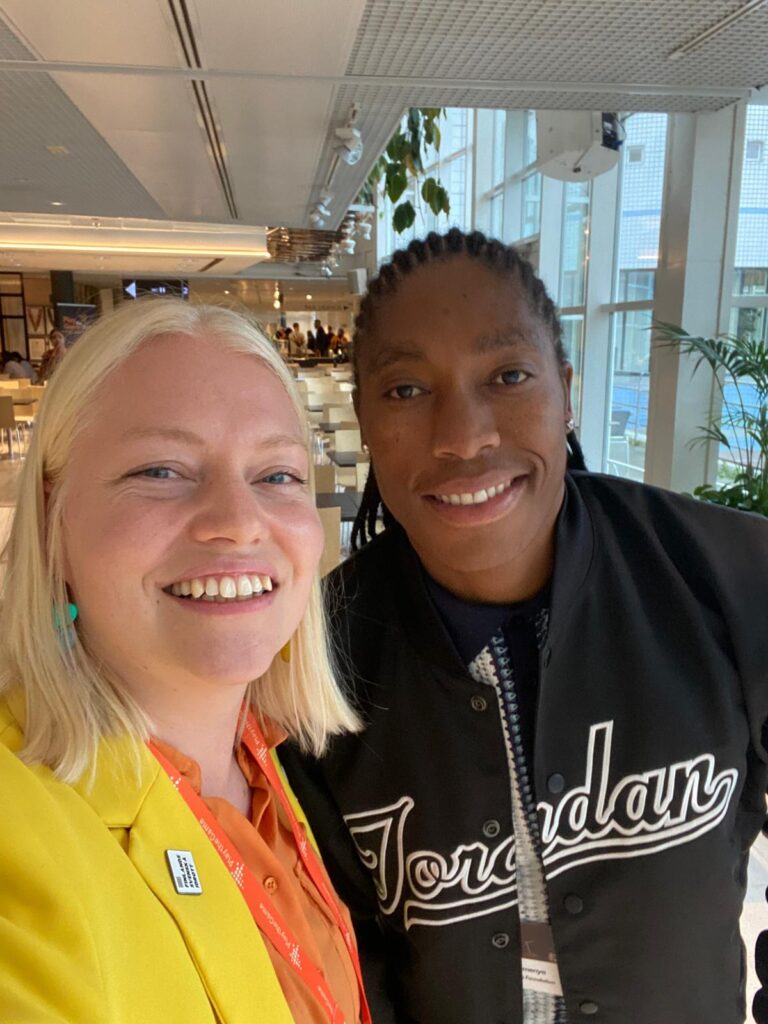
Among the first to take the stage was Caster Semenya, who shared her long and deeply personal struggle for the right to compete without being forced to alter her body.
Her long legal battle has become a symbol of how sport regulations can both shape and challenge the rights of women and intersex athletes worldwide,reminding everyone that behind every rule, there is a human being seeking dignity and fairness. Her words captured the essence of the entire event: the demand that sport see, hear, and value every human being as they are.
Other powerful moments included the stories of Abdullah Ibhais, whistleblower from the FIFA World Cup 2022 in Qatar, and Maggie Nichols, survivor of abuse within USA Gymnastics. Both received the Play the Game Award 2025 for their courage to speak truth to power and for reminding the sports world that silence protects systems, not people.
“There is a price for speaking the truth, but there is a bigger price for silence.” – Abdullah Ibhais
“You’ll never meet the children you saved, but they exist.” – John Manly, lawyer for Maggie Nichols and other survivors of abuse within USA Gymnastics
Their testimonies underscored a key message of the conference: to ensure safe sport, we must first create spaces where it is safe, and appreciated, to tell the truth. Giving survivors and other individuals a voice, guaranteeing support, and recognising their contribution is not optional. It is the foundation of trust.
Who can wear what? Women challenging exclusion in the name of neutrality
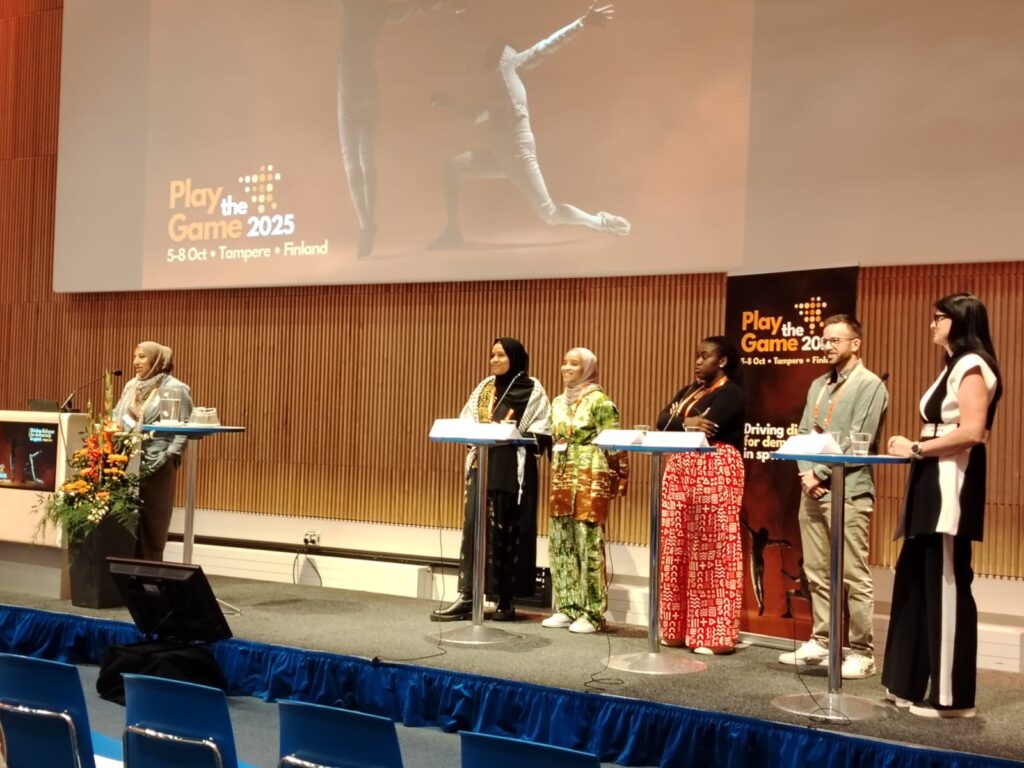
In one of several widely discussed topics in sport, Khayran Noor, founding director of Sports Legal and advocate for advancing legal standards across Africa, spoke about how hijab bans continue to exclude Muslim women under the guise of neutrality.
“When sport denies a place for the hijab, it denies a space for women themselves.” – Khayran Noor
Her message was echoed by Hélène Bâ, athlete and human rights advocate, who questioned the so-called “myth of neutrality” and reflected on how it has limited opportunities for French Muslim women to participate in sport. Together, their testimonies exposed the double standards women still face when expressing both faith and identity in sport.
The discussion connected directly to ENGSO’s advocacy for intersectional inclusion and echoed findings from the ENGSO EWS 2023 Study on LGBTQ+ Women in Sport, which revealed that discrimination rarely occurs in isolation. It is shaped by overlapping identities of gender, sexuality, faith, and ethnicity.
Between inclusion and regulation: Transgender athletes in sport
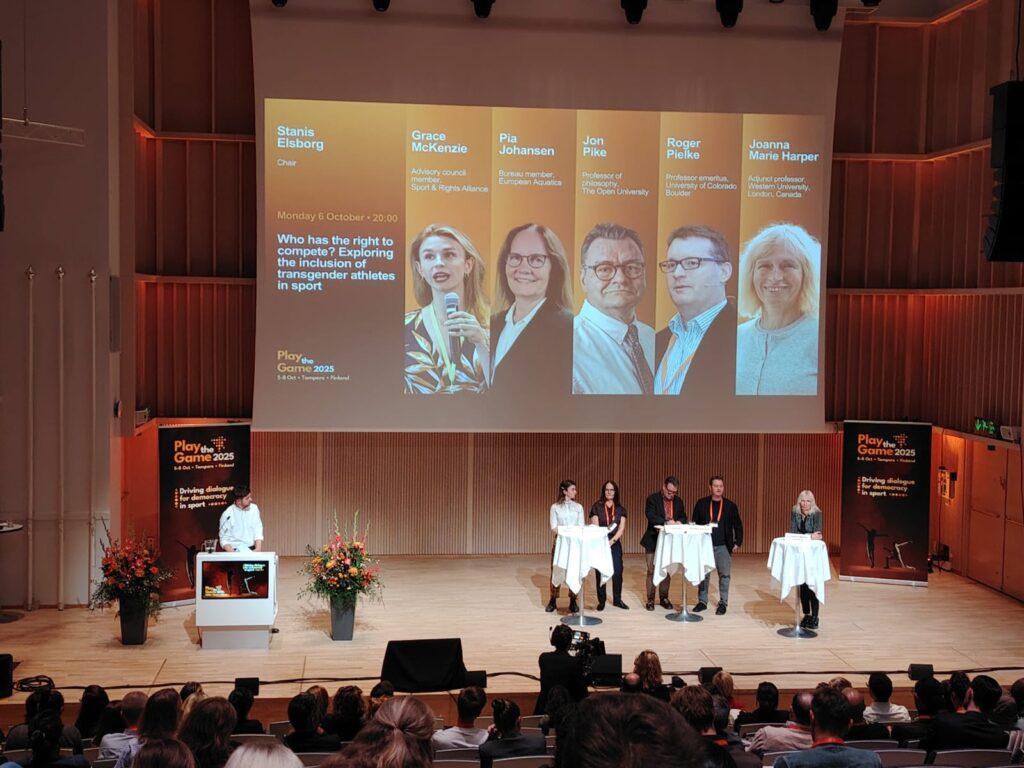
One of the sessions that invited deep reflection was “Between Inclusion and Regulation.” Featuring speakers like Graze McKenzie, Joanna Harper, and Roger Pielke, the discussion moved between science and emotion, between policy frameworks and lived realities. It reminded the audience that every debate on regulation is also a story about belonging, recognition, and respect.
“See trans athletes as human.” – Roger Pielke
“It’s euphoric to finally compete with people you identify with.” – Graze McKenzie
The dialogue went beyond debate. It raised an essential question: What do we want sport to be? The message was clear: Inclusion and fairness are not opposites. They are inseparable parts of the same value system.
ENGSO member organisations contributing to the dialogue
Play the Game 2025 also featured representatives from several of ENGSO’s member organisations, highlighting the collective European effort to promote integrity, safeguarding, and inclusion in sport.
Speakers representing ENGSO members from Finland, Denmark, Norway, and Estonia shared national experiences and good practices in areas such as safe sport, democratic governance, and human rights.
The Finnish Olympic Committee and FINCIS, together with the Ministry of Education and Culture, presented Finland’s ethical and sustainability work in sport.
The NOC and Sports Confederation of Denmark contributed to sessions on sport and human rights, emphasising the responsibility of sport organisations to defend democracy and freedom of expression.
The Norwegian Olympic and Paralympic Committee and Confederation of Sports joined panels addressing youth sport and geopolitical challenges, reflecting Norway’s commitment to open dialogue and athlete welfare.
The Estonian Olympic Committee, represented by Kestri Lajulaid, took part in a debate on democracy and accountability in sports governance. In a panel on governance and democracy, Lajulaid, President of the Estonian Olympic Committee, asked:
“Do we vote for freedom or for loyalty? What happens when voters stop demanding accountability?”
The Council of Europe’s EPAS, in which ENGSO is present as Gender Reporter of the Consultative Committee since 2022 with Marie Denitton, was represented by Elena Casero and Stanislas Frossard, contributing to sessions on safeguarding and anti-corruption. Casero presented the Start to Talk initiative, a project within EPAS works to eliminate all forms of abuse and violence against children in sport.
The project emphasises safe recruitment, responsible leadership, and the creation of systems that protect young athletes before harm occurs. Her presentation illustrated how practical tools and coordinated policy can turn words into prevention, and prevention into culture change.
Together, these contributions showcased how ENGSO’s network brings diverse European voices into the global conversation on sport’s future, united by a shared commitment to ethics, inclusion, and human rights.
From experience to action
Throughout the conference, one theme was clear: change begins with listening and having a safe and constructive dialogue. Play the Game 2025 amplified voices that have too often been sidelined. Their courage offers direction and a reminder that integrity, inclusion, and equality are not separate goals, but one shared mission.
The stories shared in Tampere will guide ENGSO’s Equality Within Sport Committee as it continues to promote:
- Safeguarding as a shared responsibility
- Intersectional inclusion across gender, faith, and sexuality
- Transparency and ethics in governance and leadership
As Tarja Krum reflected after the conference:
“Listening to these global voices helps us shape a sports culture that protects, empowers, and unites. It is a true privilege to have so many different people, from across continents and perspectives, come together in one space. We must truly appreciate all those who share their experiences: we see different views, and what matters most is to have a respectful dialogue.”
Stay tuned: ENGSO will coordinate a large collaborative project on safeguarding between 2026-2028, called “Safeguarding Approaches Focusing on grassroots sport Environment“ (SAFE) co-funded by the Erasmus+ Programme of the European Union.