

sport4cerv
ENGSO and its EWS attend Enlarged Partial Agreement on Sport (EPAS) Forum on Sport and Human Rights
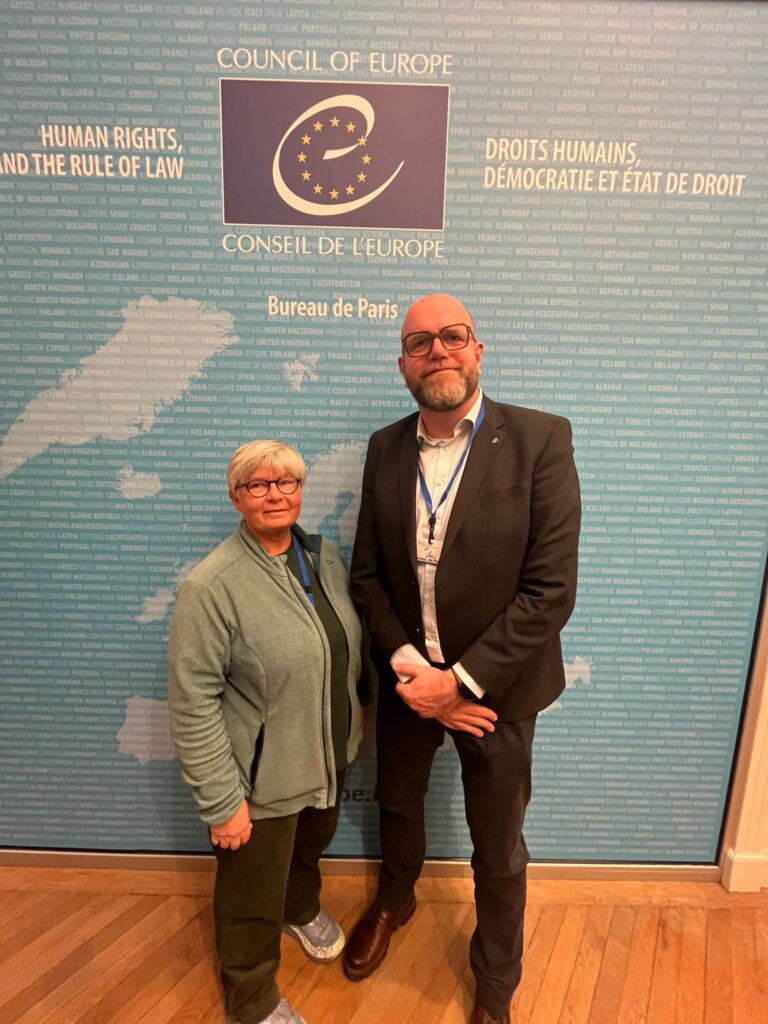
On December 16, 2025 ENGSO Secretary General Theo Neyenhuis, and EWS Vice-Chair Sarah Townsend attended the EPAS Forum on Sport and Human Rights in Paris, France, which had a health and well-being focus this year.
This fourth edition focused on health and well-being in sport, with particular attention to mental health and women’s health. The forum opened with contributions from senior representatives of the Council of Europe and the French Ministry of Sports, followed by a contextual introduction outlining current strategies linking sport, health, and human rights.
The morning session, held in a hybrid format, featured three panel discussions that explored how sport can negatively affect mental health, the benefits and challenges of sport for women’s health, and examples of best practice where sport actively promotes well-being.
Across the panels, athletes, researchers, medical experts, and policy leaders shared lived experiences, research findings, and innovative initiatives, highlighting systemic pressures on athletes, gender inequalities, low health literacy, and the need for independent, confidential, and holistic support systems. The afternoon workshops allowed participants to engage more deeply with the themes of women’s physical health and mental health in sport, providing concrete input for EPAS’s future strategic work. ENGSO contributed actively to both workshops, which emphasized collaboration, education, and evidence-based approaches.
The forum concluded with reflections from EPAS leadership, underscoring how the discussions and shared practices will inform ongoing and future work to strengthen health, well-being, and human rights across European sport.
In depth report
This annual event aims to create the opportunity for exchanges between specialists from different sectors and to showcase the work of the Council of Europe in specific thematic areas. This is the 4th edition of the event and focused on two issues pertaining to health and well-being in sport:
- Mental health and sport;
- Women’s health and sport.
The day started with opening words from Hanne Juncher, Director, Directorate of Security, Integrity and Rule of Law, Council of Europe, and Fabienne Bourdais, Sports Director, Ministry of Sports, Youth Affairs and Associations, France and followed by an introductory session on health, sport and well-being delivered by Stanislas Frossard, Head of the Sport Division and Executive Secretary of EPAS, Council of Europe and Laurence Lwoff, Head of the Health Division, Directorate General Human Rights and Rule of Law. This introduction placed the day’s work in the context of both the reasoning for the focus and of current work strategies.
The day was organised into two sections, with an open webinar in the morning hosted in hybrid format, that was guided by three panels, all followed by short Q&A sessions.
The first panel was entitled “How can sport be a danger to mental health?” was moderated by Paulina Tomczyk, General Secretary, EU Athletes, with speakers:
- Kim Bui, Olympic Gymnast (Germany) – who spoke of her personal experience as an elite athlete and how the system fails athletes in terms of offering space to address challenges and problems concerning mental wellbeing when they occur;
- Ioannis Simosis, Footballer (Greece) – who spoke about his lived experience with gambling addiction and recovery;
- David Hassan, Professor of Sport Policy and Management, FIA University, who presented their project “United against online abuse” and highlighted the need for addressing causes for online through educative approaches as well as dealing with immediate symptoms by removing abusive content when it occurs;
- Eric Florand, Expert Health and Sport, Co-founder of the Alice Milliat Foundation – who addressed how a gendered sport system creates an invisible mental burden, and the necessity for independent and mandatory support systems;
- Maëva Quessette, Tennis Umpire and Doctor of Pharmacy – who addressed the specifics of being a woman official and the challenges for mental wellbeing for the individual and the match/competition landscape.
The second panel was entitled “Is sport really beneficial to women’s health and what challenges exist?” and was moderated by Francine H. Raveney, Deputy Executive Secretary of EPAS, Council of Europe with speakers:
- Gemma Begley, Equality, Diversity and Inclusion Manager, Gaelic Players Association – who spoke to measures that can be taken to protect player mental health and emphasised a holistic approach where both mental and physical health are addressed;
- Annamarie Phelps, member of the Executive Committee, European Olympic Committees (EOC) – who presented the IWG upcoming summit, the importance of adopting a gender lens across sport and the current low health literacy for women especially in the world of sport;
- Annaliza Tsakona, FIFA Female Health and Performance Programme – who highlighted the need for educating coaches and personalised and confidential approaches;
- Katrine Okholm Kryger, medical specialist, UEFA – who spoke of the weight of structural barriers and myths of understanding of women’s health and how metrics need to be useful and not just a sport scientist measurement;
- Martine Duclos, endocrinologist, physiologist, sports doctor, Head of the Sports Medicine Department at Clermont-Ferrand University Hospital and President of the French National Observatory of Physical Activity and Sedentary Lifestyles – who addressed how crucial it is to understand physiology;
- Lisa West, Head of Policy Partnerships and Public Affairs, Women in Sport – who presented research from the organisation and how gender stereotypes create barriers with the result of a mental health crisis for girls and women;
The third panel was entitled “Best practice: sport as a means of promoting well-being for all” and was moderated by Eva Jacomet, Head of EU Affairs, Sport and Citizenship, with speakers:
- Erik van Haaren, Sports Psychologist, safeguarding advisor, Center for Safe Sport in the Netherlands, NOC*NSF – who described the work that the division is doing and parroaches they are taking to protect athletes;
- Valerio di Tommaso, President and Director, European Culture and Sport Organization, Italy – who presented the “Crazy for Football” project, the Madmen Coach and other innovative initiatives for a sport offering for participants living with mental health challenges:
- Babak Amir-Tahmasseb, Director of International Relations and the Grand INSEP network, French Institute of sport, expertise and performance (INSEP) – who talked about European projects INSEP is working on to promote mental health in sport;
- Edel McMahon, National team captain, Rugby Ireland – who presented the “Tackle Your Feelings” project and the role and impact of positive role models on player mental health;
- Jeroen Carrin, Head of the Olympic Refuge Foundation, International Olympic Committee (IOC) – who introduced the Sport Coach+ project and the importance of implementing a scalable evidence- based methodology in striving to find solutions for global problem of people forced to flee homelands, where often a sport environment becomes the only stability;
- Ahmet Temurci, Director General for International Organizations and Foreign Relations, Ministry of Youth and Sports of the Republic of Türkiye – who spoke of initiatives for youth in Turkey.
Solène Charuau, Chair of the EPAS Governing Board, Council of Europe and Stanislas Frossard, Head of the Sport Division and Executive Secretary of EPAS, Council of Europe concluded the morning session with a summary of the work presented.
The afternoon session was divided into two workshops centered on the focus of the day themes, and with the goal of offering input for the Council of Europe’s Sport Division strategic work. ENGSO attended both sessions, with EWS vice-chair, Sarah Townsend participating in the workshop Women’s physical health and sport, facilitated by Francine H. Raveney, and Carole Maître, Gynaecologist, INSEP and ENGSO Secretary General, Theo Neyenhuis participating in the second workshop – Mental health and sport, facilitated by Erik van Haaren, former ENGSO Youth Vice Chair and Sports Psychologist, Center for Safe Sport in the Netherlands (NOC*NSF), and Paulina Tomczyk, General Secretary, EU Athletes. Both sessions were interactive and provided an arena of exchange of ideas for challenges and good practices.
The day concluded with workshop rapporteurs’ presentation of discussions and final closing words from Stanislas Frossard, Francine H. Raveney, and Solène Charuau, with how this forum work will serve EPAS work moving forward.
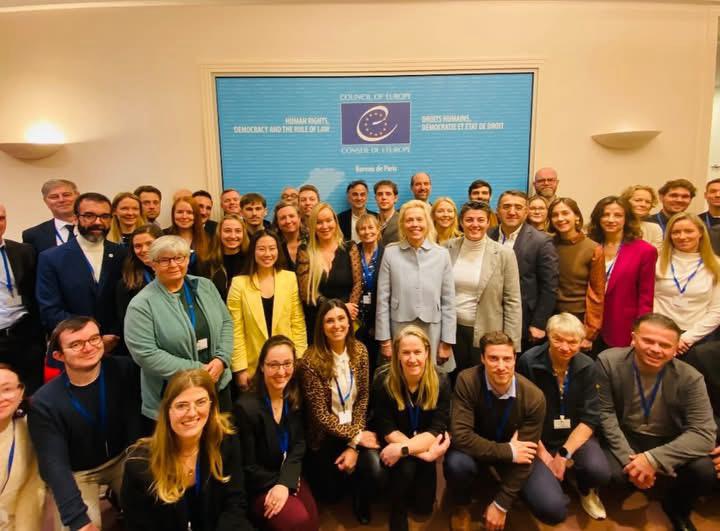
Photo: Council of Europe