New Barometer highlights changing physical activity habits
One of the highlights of this year’s European Week of Sport was the release of the 2026 Eurobarometer on Sport and Physical Activity, which provides insights into Europeans’ exercise and physical activity habits.
The findings show some positive developments. The share of people exercising almost daily has risen by 3 percentage points to 9%, while those exercising several times a week increased by 6 percentage points to 38%. At the same time, 39% report that they never exercise or play sport — a decrease of 6 percentage points. However, inactivity remains particularly high in some countries, reaching 68% in Portugal, 66% in Romania and 65% in Greece.
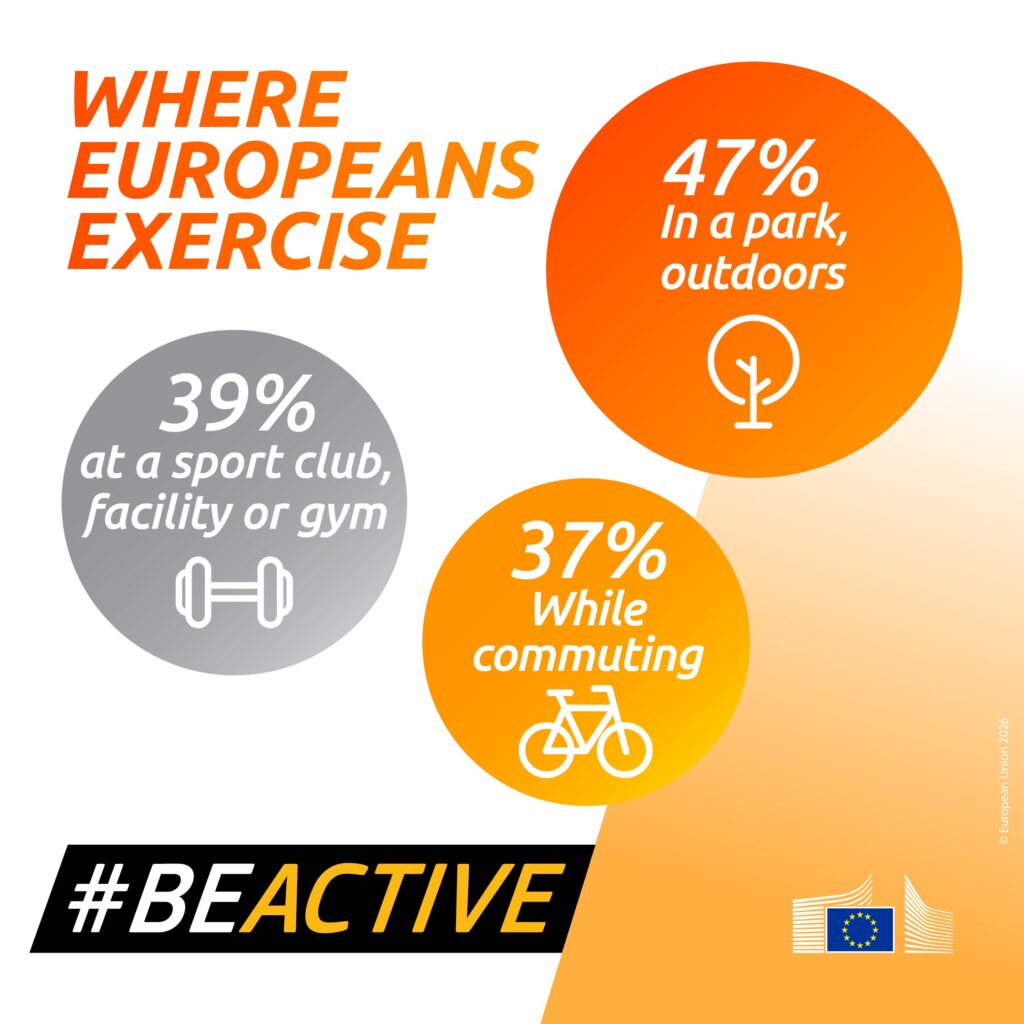
The data also point to broader changes in the ways people stay active. Attendance at health and fitness centres has risen to 39%, while active commuting by walking or cycling has increased by 13 percentage points to 37%.
The findings underline that the benefits of sport and physical activity extend beyond physical health. 93% of respondents agree that sport and physical activity improve mental health, while 86% believe they are important for building communities. Yet only 26% identify improving mental health or reducing stress as a reason for exercising, highlighting a potential gap between recognising the benefits of physical activity and acting on them.
About the European Week of Sport
From 23–30 September, the European Week of Sport is bringing people of all ages, backgrounds and abilities together through sport and physical activity, locally, regionally, nationally and across borders in 40 countries.
Since the launch of #BeActive and the European Week of Sport in 2015, the initiative has engaged 118 million participants through more than 433,000 activities. Behind these impressive numbers are people connecting with others, discovering new activities, enjoying the outdoors, improving their wellbeing and finding inspiration to make movement part of their everyday lives.
Now in its 11th edition, the European Week of Sport continues to highlight the power of sport and physical activity to bring people together and contribute to healthier, more active and more connected communities.
For ENGSO, the European Week of Sport is also an opportunity to reinforce the importance of accessible, inclusive grassroots sport, where everyone has a place and everyone can find a way to be active.